
Dances in India
Cities Covered
What's Nearby
Education
Kathakali (m)
Bharat Natyam (m)
Kuchipudi (m)
Kathaka (m)
Odissi (m)
Manipuri (m)
Folk Dances (m)
Overview
India is a land of rich cultural heritage, and its classical and folk dances are a mesmerizing reflection of its diverse traditions. This specially curated cultural tour takes you through the heart of India’s performing arts—exploring the elegance of Kathakali in Kerala, the divine grace of Bharat Natyam in Tamil Nadu, the dramatic expressions of Kuchipudi from Andhra Pradesh, and the rhythmic storytelling of Kathak from North India.
The journey continues with the soulful Odissi of Odisha, the gentle flow of Manipuri dance from Manipur, and vibrant folk dance traditions from across the country. Whether you're a cultural enthusiast or simply curious, this immersive tour offers an unforgettable glimpse into the rh
Included/Excluded
Airport assistance on Arrival & Departure.
Accommodation on Double Sharing Occupancy rooms (Two Guest in one room )
Daily breakfast at the hotel
A/C not move in hill area.
Welcome Drink on Arrival {Non- alcoholic}
Child below 5 years Complimentary.
Intercity transfers and sightseeing by chauffer driven car (A/C Vehicle )
Toll taxes, parking and fuel
Extras at the hotel
Personal Purchase
Heater charge extra
Domestic Flight/International
All applicable Taxes ( 5. % GST Tax )
All monuments entry fee.
Itinerary
:

Dance in india has had a long history and it is mentioned in the Vedas themselves. The reference in the great epics, the Ramayana and Mahabharata,are more profuse,Arjuna one of the heroes of the mahabharta,during his period of exile,was employed by the king of virata as a teacher of music and dance to the princesses. Thus, in those days dance was highly respected art. Dance formed an intrinsic part of worship in the temples,Siva is Natraja, The king of dances, who performs in the hall of consciousness and creates the rhythm of the universe.
The earliest work on dancing is the natyasastra ,which is a great exposition of Indian aesthetic on music and drama.Accroding to abhinaya darpana of nandikesvara and sangita is divided in three categories:
Nrtta : This is a pure dance without interpretative meaning. The movements of body do not express any mood (Bhava).
Nrtya : This is a dance without interpretative meaning.The gestural expression of the limbs and face,I.e abhinaya is combined with nrtta.
Natya : This corresponds to drama. When nrtya is performed to the words sung in musical melody it becomes natya.
Each cultural area in the country acquired eventually a local idiom. Regional folk dance themes were assimilated into classical into classical art. Thus rose 6 main schools of classical dance: Kathakali bharata natyam,Kuchipudi of the south,Kathaka of the north ,Odissi of the east and Manipuri in the north east. Besides , there are the bhaganata mala nataka of thanjavur,and the yaksagana of Karnataka. They are the dance – drama traditionally performed by the men called bhaganatas who are brahmanas and are well trained in dance and pantomime as embodied in the natyasastra.
:
Kathakali

The technique of kathakali represents India’s ancient tradition when dramas were acted and sung. It is neither just pantomime nor dance alone, but a vivid and viral combination of natya.(Drama),Nrtta(abstract dance) and nrtya (Interpretative dance) in a dynamic whole. It is performed by men(Even the female roles) and its accent is on the tandava, the more forceful aspect of dance. Katha is a short form of katha,Which means of story of them; Kali in the malyalam means play. Hence the meaning of kathakali is play with story. The art of kathakali performers lies in the fact that without the aid of any stage properties or décor they can conjure up convincing visions of celestial grandeur and the grandeur of the past. In none of the classical dances,the entire body is used so completely as kathakali. The movements of eyebrows, the eyeballs, eyelids and the lower lips as described as natyasastra are not used an extent in any other dance style in India. The main centers of kathakali are international centre for kathakali(New Delhi),Ravindra bharati(Kolkata) ,santiniketan(West Bengal) and P.J.V natysangam.
:
Bharat Natyam
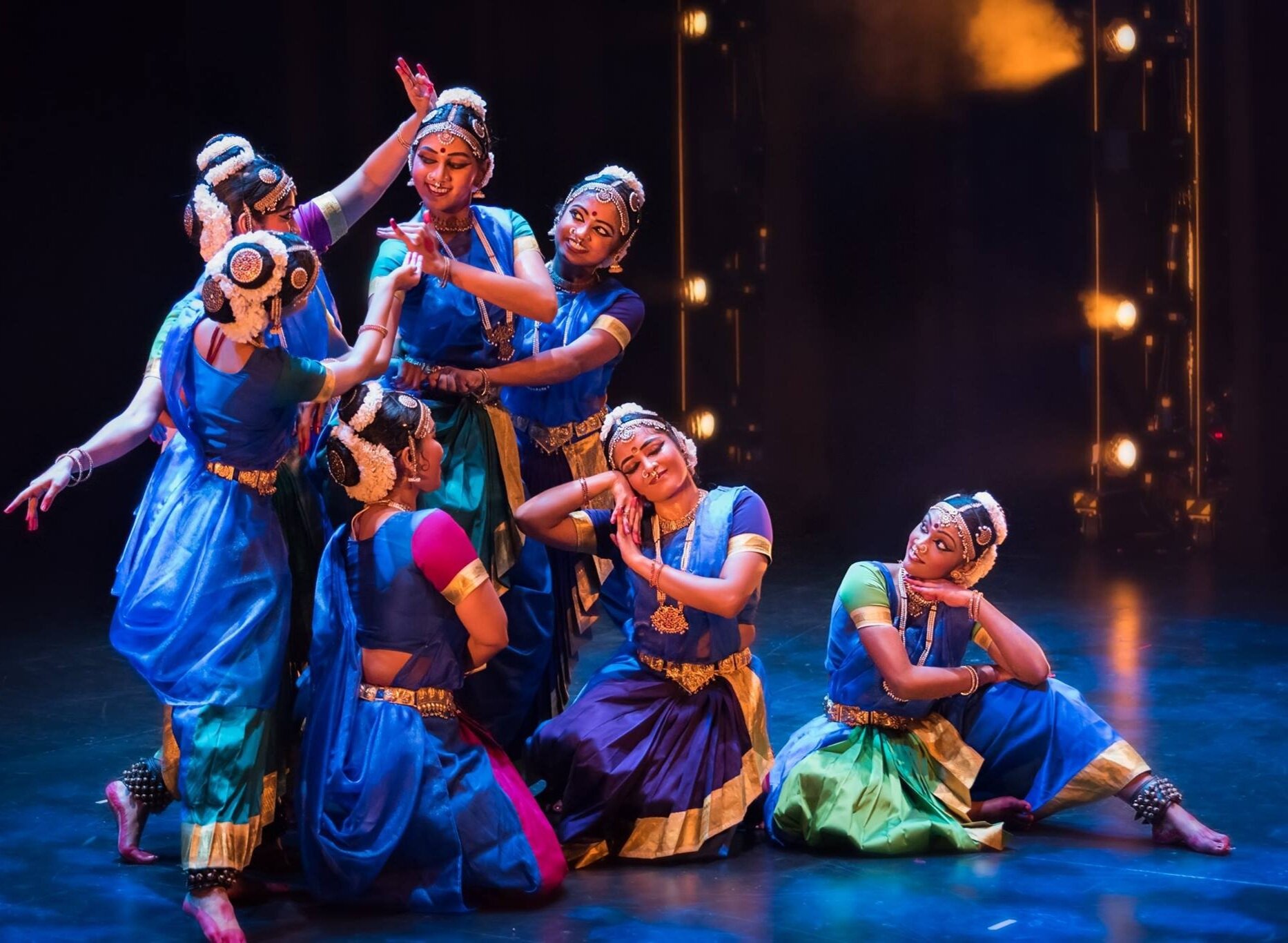
Bharat natyam is the oldest classical dance that conforms closely to the traditions of Bharata’s Natysastra and it flourished mainly in south india. It is the traditional dance of tamilnadu,the name derived from Bharat muni. In bharata natyam,the dancer is usually a woman, accompanied on stage by musicians and instrumentalists. The chief musical instruments are a pair of cymbals, which provides the tala or timing and the mrdangam(the drum). The song presents karnatak school of music. The costume consists of brocade sari and over the sari in the middle, pleated brocade hang from waist to the knees, with the choli covering the upper part of the body,jewellery, and the veni(Floral garland) adorning the hair. The main caentres of bharata natyam are kala kshetra(Chennai),Darpan(Ahmedabad),Raj rajeshwari kala mandir(Mumbai)
:
Kuchipudi

Kuchipudi is the dance drama takes its name from the place of its origin,kuchelupupram in Andhra Pradesh. The antiquity of this style of dance drama is tracked back to the times of the satavahana kings in the second century Bc. Sculpture excavated from kunchipudi in the krsna district indicates two main schools-Devadasi and kelika. The performance of kuchipudi begins with purvaranga by decorating the stage with rangoli and a copper pot with mangolaps and offering of flowers.
:
Kathaka

The kathaka dance originated from the simple devotional mime of kathakas who were originally a caste of story tellers or reciters of episodes from the epics attached to certain temples. Their references are found in Bharata Muni’s natyasastra and the brahma purana. The Kathaka programme is made up of three main items firstly amada, a dance salutation ,second a series of intricate and complex steps called torahs and thirdly gathas or interpretation through gestures of history. The main centres where training on kathaka is imparted are kathak Kendra(New Delhi) Gandharva vidyalaya(New Delhi) Jaipur kathak Kendra(Jaipur) Bhatkande sangeet vidyapeeth (Lucknow),Kadamb (ahmedabad) and M.S university.(Vadodara).
:
Odissi

Odissi dance of Orissa, according to the inscriptions on the hathigumpa cave in udaigiri,originated in the second century BC during the time of jainanking kharavela. The king himself was a great patron of dance and music,regularly hosting dance recitals in his capital. The tradition of this dance was carried over successive historical periods, as hindu rituals in temples. The odissi dance follows the basic rules of natyasastra and silpa sastra in technique. The movement of head, the hips and the knees are an important part of this dance form. Odissi dances are soft,Lyrical, preserved not only by their great exponents but also brought to posterity by the alluring poses in sculpture. The main centre of odissi dance training are utkal college(Bhubaneshvar),Kala vikas Kendra(Kolkata),Bhartiya kala Kendra(Delhi)and Triveni kala sangam.(Delhi)
:
Manipuri

Cradled in the spurs of the Himalayas as they dip into Assam, Manipur has its own indigenous folk dances which reach the heart of nature and epitome rhythm, loveliness and perfection in a technique peculiar to itself. There are two Manipuri dance varieties:
Meitic dances, such as lai harouba and kambiha thobis, and
Vaisnavaites dances which chiefly present the varieties of rasa.
The main centres for training of Manipuri dance are JN Manipuri dance Accademy(Imphal),Ravindra Bharati(Kolkata),Viswa Bharati(Santiniketan) and Triveni Kala sangam(New Delhi)
:
Folk Dances

Apart from the major classical dances, India presents a varied style of folk and tribal dances. Folk dances are generally spontaneous expressions of the sociological, psychological and historical moorings of rural India. They are regularly performed festive and religious occasions in rural pockets of the country. They vary in colours, in costume, Language, music and style. The major folk dances are Teyyam,Kolattam,Kumni ottal Tudal,Kaikotikalli and Tappattikkali in south India. North Indian folk dances are Kajri,Nautanki,Ras Lila,Karan, Rauf,Bhangara khayal and ghumar dance. The major Indian western Indian folk dances are dandia-Ras,Garba and Tamasa. Important Eastern Indian folk dance are chau and Bihu.
The folk and tribal dances are recognized as one of the major indigenous elements of Indian dance styles and are performed along with classical elements by noted dance exponents of the country.
Reviews
0/5
Not Rated
Based on
0 review
Excellent
0
Very Good
0
Average
0
Poor
0
Terrible
0
No Review
from
₹0
Tour Start Date
{{ start_date_html }}
Tour End Date
{{ end_date_html }}
Last Booking Date
{{ last_booking_date_html }}
{{start_date_html}}
{{type.desc}}
{{type.display_price}} per person
Extra prices:
({{type.price_type}})
{{type.price_html}}
Discounts:
{{type.from}} - {{type.to}} guests
from {{type.from}} guests
- {{ formatMoney(type.total) }}
({{type.price_type}})
{{ type.price }}%
{{ formatMoney(type.price) }}
- {{total_price_html}}
- {{pay_now_price_html}}
from
₹0
